The real dives behind my underwater illustrations
Scuba diving Art
Aurealis Creatief
At 41 metres off the Medes Islands, on the Costa Brava, it suddenly turned very cold. One moment the water felt almost warm, the next it was cold, as if I had swum through an invisible line. Divers call it a thermocline. My logbook lists it as dive 47: 41 metres, 48 minutes. It is still my deepest dive, and the one I think of first whenever I draw a diver heading into the depths.
For me, diving art begins with that dive in Spain, and with some fifty dives that really happened. Not every animal in my Underwater World collection is a memory, but the light, the cold and the colours are.
· From logbook to wall ·
Discover the whole Underwater World collection
Every illustration in this story is part of the Underwater World collection and is available as acrylic glass, metal plate or art block.
Diver's book
Fifty dives in a little blue book
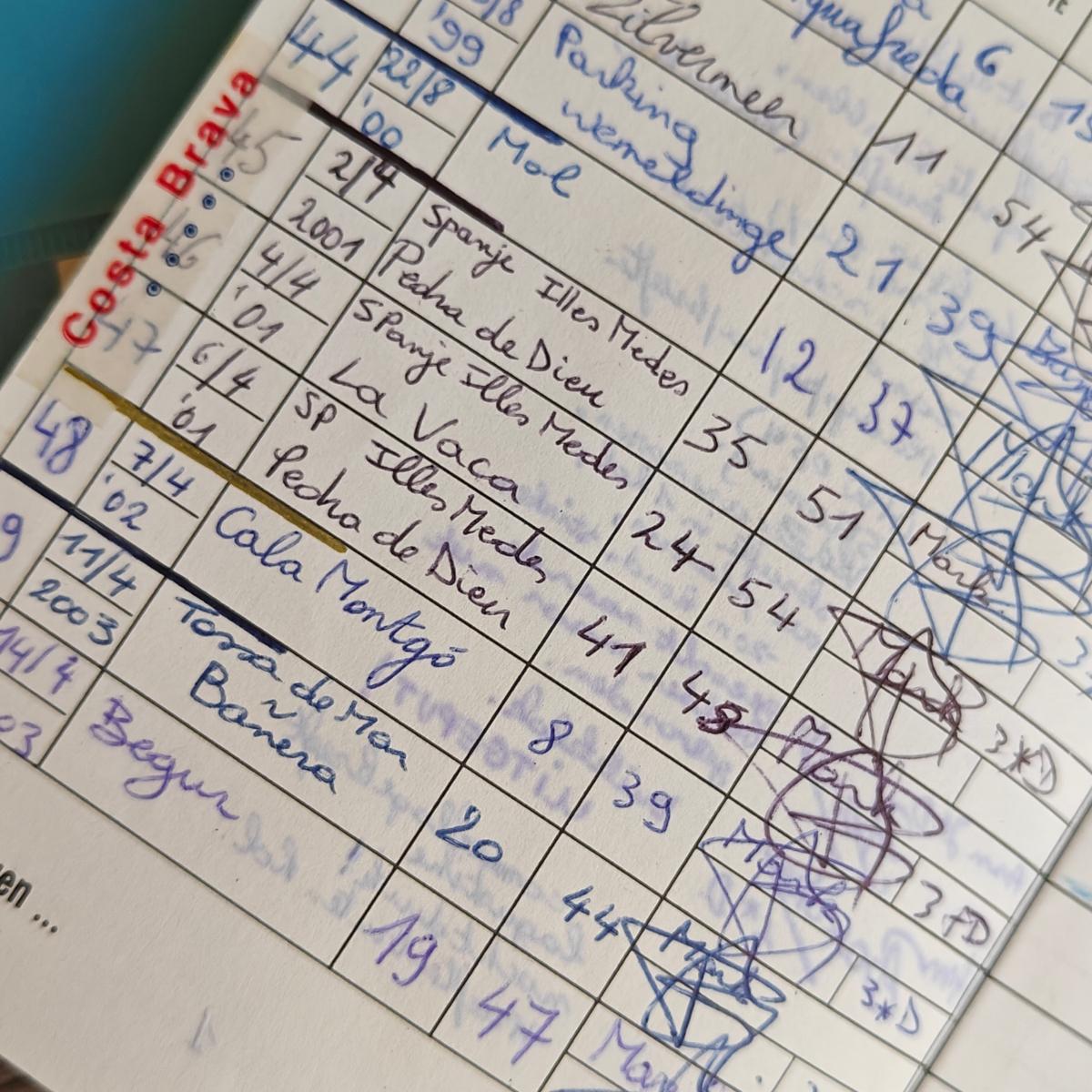
My diver's book holds fifty dives. Leafing through it now is like looking at an old map. Mol, Kelchterhoef and La Gombe at Esneux, the lakes and quarries of Belgium. Wemeldinge, Sas van Goes, Scharendijke and De Ketel at Yerseke, in Zeeland. And then, spring after spring, the Costa Brava. Every line holds a place, a depth, a dive time and a signature from my buddy, usually my brother.
Featured works
Dark water close to home
Most of my dives did not take place in clear blue water at all. In Zeeland and in the Belgian lakes the light fades fast; from about four metres down it can be pitch dark. You learn to trust your torch, your compass and your buddy.
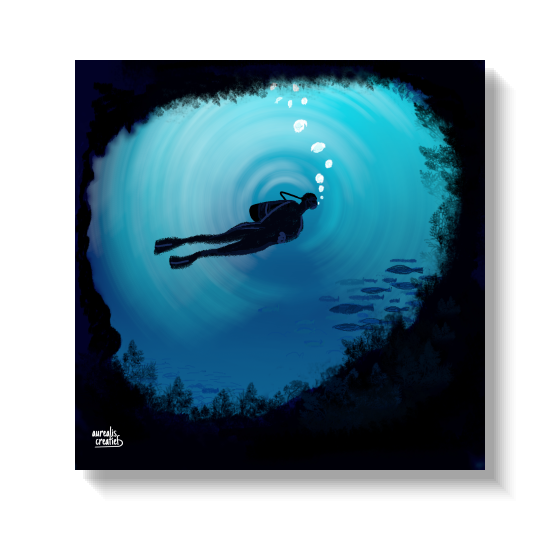
'Cave diver' grew out of that darkness.
'Cave diver' grew out of that darkness. The North Sea has no caves, but in black water a beam from your torch is always the nicest way to explore. I did a few small cave dives at L'Estartit, in the tunnels around La Vaca in the Medes Islands, where we swam through wide passages in the rock.
A boiled egg for the grouper
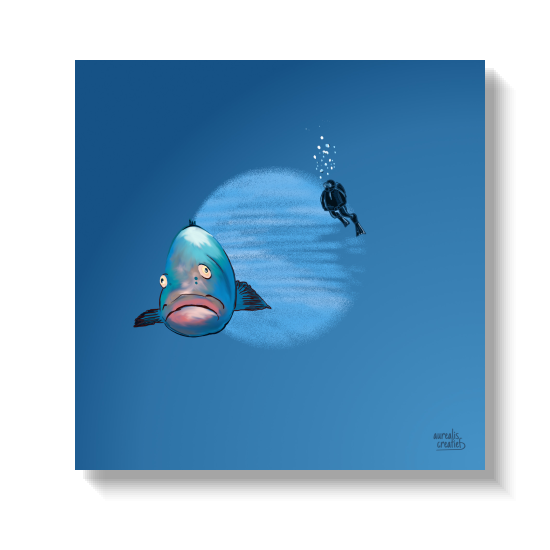
On that same dive at La Vaca we met the locals: big groupers, slow and curious, and used to divers. We had brought a boiled egg. One grouper swallowed it in a single bite. That heavy, comical face, all lips and patience, became 'Colorful fish'.
Inspired by the grouper of La Vaca.
Shore dives at Cadaqués
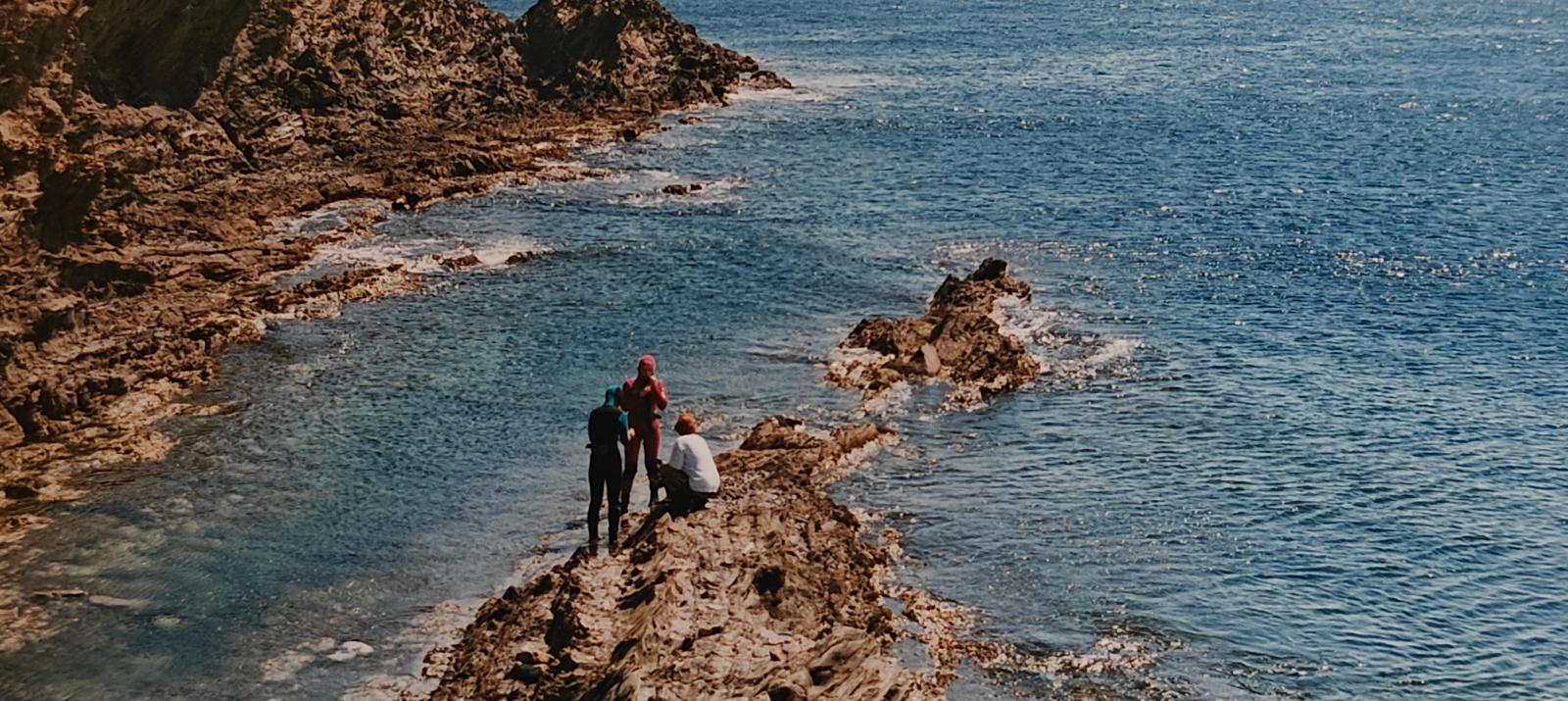
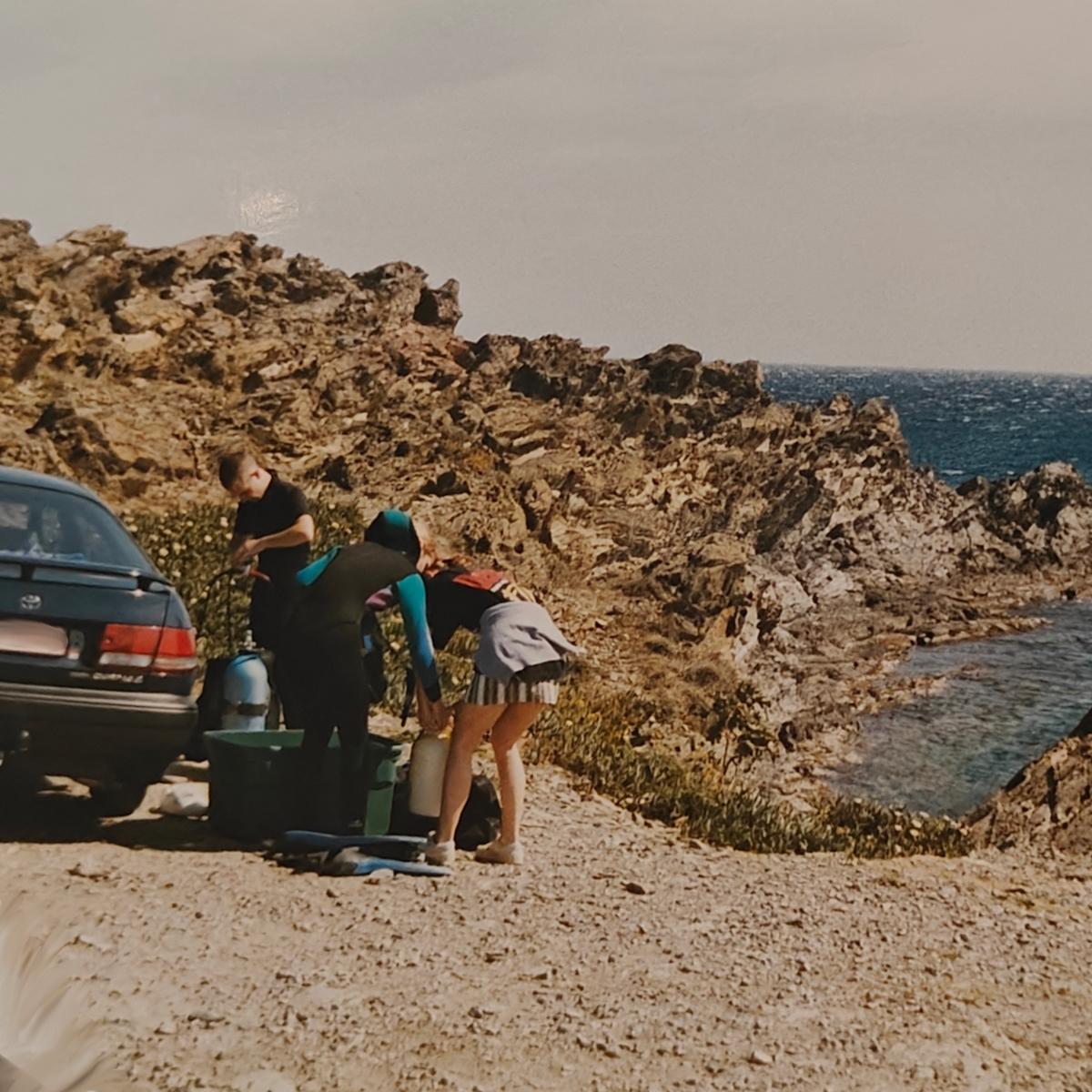
The most beautiful dives started from the shore. During the Easter holidays we drove along the Costa Brava looking for places where we could walk straight into the sea. We dived from the concrete quay of the little fishing village of Sa Tuna near Begur and from the beach of Codolar at Tossa de Mar, but our favourite spot was the rocks of Cadaqués. We parked at the edge of the cliffs, pulled on our wetsuits beside the car and climbed in. Think wild camping, but for divers.
My notes from Cadaqués read like a sketchbook: white coral, yellow anemones, strong wind, rough sea. One day we jumped in from the very tip of a headland, which put us straight into deeper water.
Featured work
Glowing jellyfish
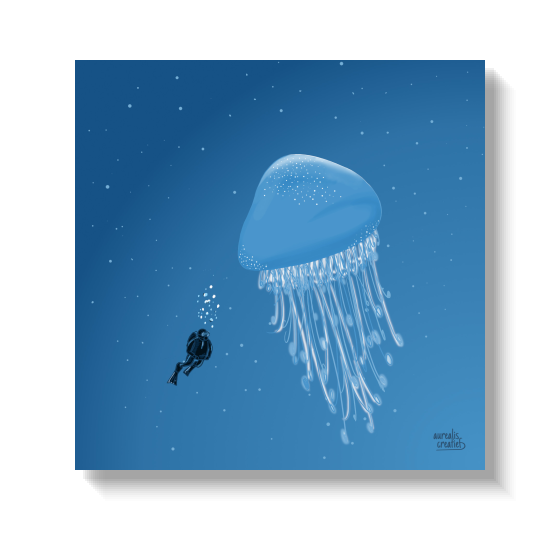
At 27 metres we found red coral. Another day the water was full of tiny transparent jellyfish, each about the size of a grape. Those little jellyfish became 'Glowing jellyfish'.
Salvador Dalí's house stands in the bay of Portlligat, just north of Cadaqués. I visited it on one of those trips, and it lies on the same stretch of coast as some of my most beautiful dive memories.
Inspired by a dive in Cadaqués.
The seahorse
For a long time I was convinced I had met a seahorse at around 30 metres. When I looked it up in my diver's book, the seahorse was not there. The red coral was, squeezed into the tiny box for notes. If it were up to me, a logbook would have far more room: space for a proper account or a quick sketch after every dive. Or for a fun dive stamp, but I tell that story on my page about scuba diver art.
Memories fade, but illustrations can keep them alive.
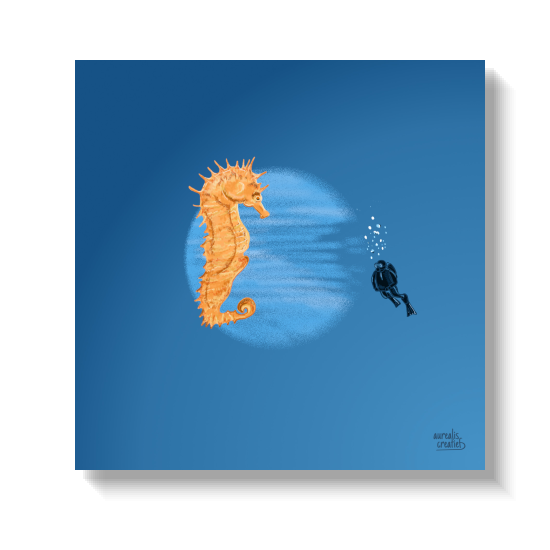
And the seahorse in 'Scuba Diver & Seahorse' may well be an encounter you really had: a small orange companion right beside the diver.
A cuttlefish off Elba
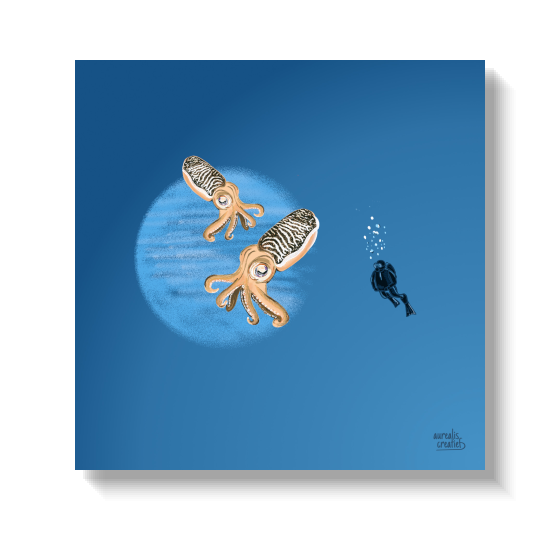
Not long after my last dive with a tank, I went snorkelling off the island of Elba. Below me, a cuttlefish moved so elegantly; you may know the sight, rippling and dancing on the swell. That dance is why 'Cuttlefish' became the next piece after the whale shark.
Rippling and dancing on the swell
Bring the ocean home
From logbook to wall
Every illustration in this story is part of the Underwater World collection and is available as acrylic glass, metal plate or art block.
View the Diving art in my shop
Is there a dive site you would love to see drawn? My custom art page explains how a commission works.
And if you are curious about the little figure who appears in all of these scenes, read more about my scuba diver art.
Frequently asked questions
Is your diving art based on real dives?
Partly. The dark water, the cold layers, the red coral, the grouper and the shore dives along the Costa Brava come straight from my logbook. The big encounters, such as the whale shark and the white shark, are dives I never made but still dream about. Every piece is drawn by hand in GIMP.
What does a thermocline feel like when you dive?
A thermocline is the boundary between warmer water near the surface and colder water below. You feel the temperature drop within a single fin kick, and where the two layers meet the water can shimmer and blur. I passed through one on my deepest dive, at 41 metres near the Medes Islands.
Why do colours fade in underwater art?
Because they fade underwater. Water absorbs light colour by colour: red disappears within the first few metres, then orange and yellow, until mostly blue and green remain. In 'Scuba Diving love' the coral in the foreground is lit and bright, as if caught in the beam of a dive torch, while everything behind it fades into blue.